Join a Workgroup
Workgroups are the heart of how The Metaweb coordinates contributions. Each workgroup advances one Design Principle (DP) – pick yours and join an active community of contributors.
What are workgroups?
Workgroups are small, focused teams that move a single Design Principle (DP) from concept to working draft. Each workgroup has a charter, a coordinator, and a flexible roster of members who contribute as their time allows. There is no requirement to attend every meeting or write every line – workgroups run on async collaboration, with synchronous time reserved for moments that need it.
Workgroup roles
Every workgroup has seven named positions. Pick the role that fits the contribution you want to make.
Coordinator
Leads the workgroup, sets agenda, and coordinates contributors.
Co-lead
Shares recruitment, member approvals, and contributor coordination with the coordinator.
Editor
Edits drafts, coordinates document revisions, and maintains quality.
Presenter
Presents workgroup output at meetings, webinars, or public sessions.
Facilitator
Facilitates meetings and helps the group reach consensus.
Liaison
Coordinates with other workgroups, layers, or external partners.
Recorder
Captures meeting notes, decisions, and action items.
Join or nominate
Join as a member
Already a GovHub member? Pick a workgroup below and click "View workgroup," then use the Join button on the workgroup page. You can join as many workgroups as you have time for.
Browse workgroupsNominate someone (or yourself)
Want to step into a Coordinator, Editor, or other leadership role? Open any workgroup below and use the Nominate button – you can nominate yourself or someone else, and the nominee reviews the nomination before it goes to layer admins.
Open a workgroup to nominateActive workgroups
Approved workgroups from every active layer, with The Metaweb listed first. Click any card to view details, members, and the Join button.

DP1 - Federated Authentication & Accountability
Developing standards for federated authentication systems that enable cross-platform identity verification while maintaining accountability and audit trails.
More
DP2 - Participant Agency and Empowerment
Creating frameworks that empower participants with full control over their digital presence, decision-making authority, and ability to shape their environment.
More
DP3 - Adaptive Governance for an Exponentially Growing Community
Designing governance systems that can scale with exponential community growth while maintaining fairness, participation, and adaptability to emerging challenges.
More
DP4 - Data Sovereignty and Privacy
Establishing protocols for complete data ownership, privacy by design, and user-controlled data portability across the Meta-Layer ecosystem.
More
DP5 - Decentralized Namespace
Developing decentralized naming systems that provide persistent, user-controlled identifiers and namespaces independent of centralized authorities.
More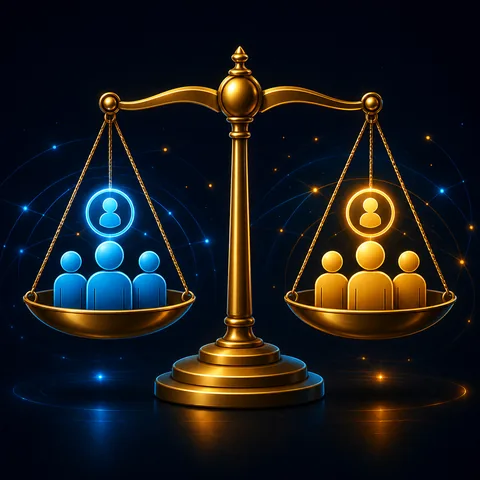
DP6 - Commerce
Creating secure, transparent commerce protocols that enable value exchange, micropayments, and economic interactions within the Meta-Layer.
More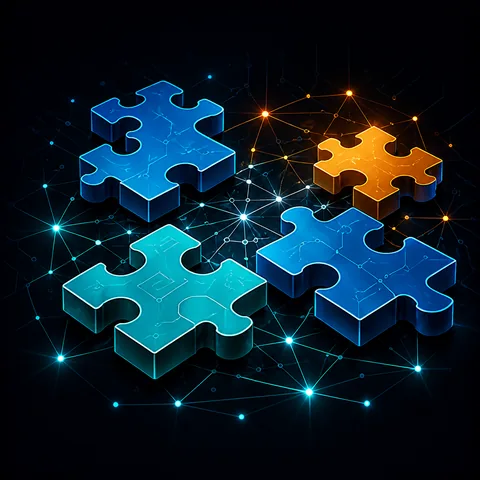
DP7 - Simplicity and Interoperability
Designing systems that reduce complexity while ensuring seamless interoperability between different platforms, tools, and communities.
More
DP8 - Collaborative Environment and Meta-Communities
Building frameworks for meta-communities that span multiple platforms and enable fluid collaboration across organizational boundaries.
More
DP9 - Developer and Community Incentives
Creating incentive structures that reward developers and communities for contributing to the ecosystem while aligning with long-term sustainability.
More
DP10 - Education
Developing educational frameworks and tools that help participants understand and effectively use the Meta-Layer capabilities.
More
DP11 - Safe and Ethical AI
Establishing ethical frameworks and safety protocols for AI systems operating within the Meta-Layer to ensure alignment with human values.
More
DP12 - Community-Based AI Governance
Creating community-driven governance models for AI systems that ensure transparency, accountability, and collective oversight.
More
DP13 - AI Containment
Developing containment strategies and technical measures to prevent AI systems from exceeding intended boundaries or causing unintended consequences.
More
DP14 - Trust and Transparency
Building trust through transparent decision-making, auditable processes, and verifiable system behaviors throughout the Meta-Layer.
More
DP15 - Security and Provenance
Ensuring security through comprehensive provenance tracking, secure infrastructure, and verifiable data lineage across all interactions.
More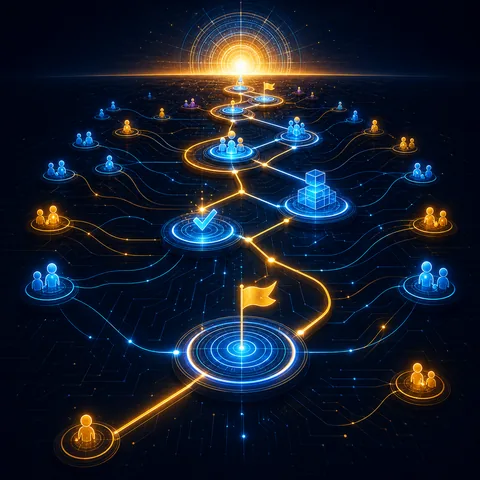
DP16 - Roadmap and Milestones
Developing structured roadmaps with clear milestones that guide the evolution of the Meta-Layer while maintaining community alignment.
More
DP17 - Financial Sustainability
Creating financial models and incentive structures that ensure the long-term sustainability and equitable growth of the Meta-Layer ecosystem.
More
DP18 - Feedback Loops and Reputation
Implementing feedback mechanisms and reputation systems that reward positive contributions and maintain community standards.
More
DP19 - Amplifying Presence and Community Engagement
Developing systems that amplify community participation, enhance visibility of contributions, and strengthen community bonds.
More
DP20 - Community Ownership
Ensuring community ownership through decentralized governance, shared decision-making, and equitable distribution of value and control.
More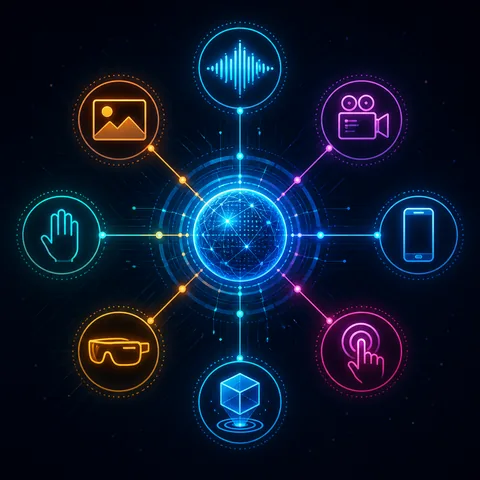
DP21 - Multi-modal
Enabling seamless interaction across multiple communication modalities including text, voice, video, AR/VR, and emerging interaction paradigms.
More
DP22 - Civic Memory & Epistemic Continuity
Exploring how the Meta-Layer can preserve the continuity of civic meaning across artifacts, evidence, interpretation, AI transformation, governance, and feedback over time. The group focuses on building the conceptual, governance, and technical foundations for durable, navigable, and plural collective memory systems that support civilization-scale collective intelligence without collapsing into surveillance, narrative capture, or synthetic consensus.
More
DP23 - Universal Participation & Linguistic Interoperability
Stewards Desirable Property 23: universal participation and linguistic interoperability as foundational conditions for shared global sensemaking in the Meta-Layer.
More
DP Discovery
Curates, evaluates, and surfaces desirable properties the current 23 may have missed. The Discovery workgroup triages community submissions, runs open calls for emerging challenges and missing requirements, and shepherds any promising new property from candidate to draft to Challenge inclusion. Responsible for keeping the set of DPs honest — closing gaps, merging duplicates, and capturing signals from practice (implementations, failures, regulatory shifts) that point to properties not yet on the list.
MoreMeta-Layer Governance
Meta-Layer Governance provides the processes through which the community develops, evaluates, adopts, and maintains the standards that define the Meta-Layer ecosystem. Governance is centered on the progression of ML-Drafts into ML-RFCs (Meta-Layer Requests for Comment), ensuring that ideas move from exploration to constitutional status through transparent deliberation, implementation experience, and rough consensus. ML-Drafts serve as experimental and discussion-oriented documents, while ML-RFCs represent stable standards, governance frameworks, protocols, terminology, or Desirable Properties that have achieved broad community support. Advancement from Draft to RFC requires demonstrated utility, open review, documented feedback resolution, and evidence of community adoption or implementation where applicable. RFC approval and retirement decisions are made through a combination of rough consensus, public comment periods, and formal voting mechanisms when consensus cannot be clearly established. Beyond standards stewardship, governance also encompasses working group formation, dispute resolution, versioning and classification systems, archival practices, community representation, delegated authority, transparency requirements, and integration with DAO-based governance processes. The objective is not merely efficient decision-making, but the cultivation of a regenerative, accountable, and participatory process through which the Meta-Layer can evolve while remaining aligned with its foundational values and Desirable Properties.
MoreISOC Nevada Pioneers
The tough desert groundbreakers for a better, safer and inclusive internet for all Nevadans.
MoreFrequently asked questions
Ready to contribute?
Pick a workgroup, click Join, and start contributing at the level that fits your time. If you want to lead, nominate yourself – the path from member to coordinator is open to everyone.
Browse all workgroups